The Hidden Link Between Emotional Stress and Fatigue
You slept for eight hours.
Yet you wake up feeling like you barely rested.
Your body feels heavy.
Your mind already feels overwhelmed.
Even simple tasks seem to demand more energy than you have.
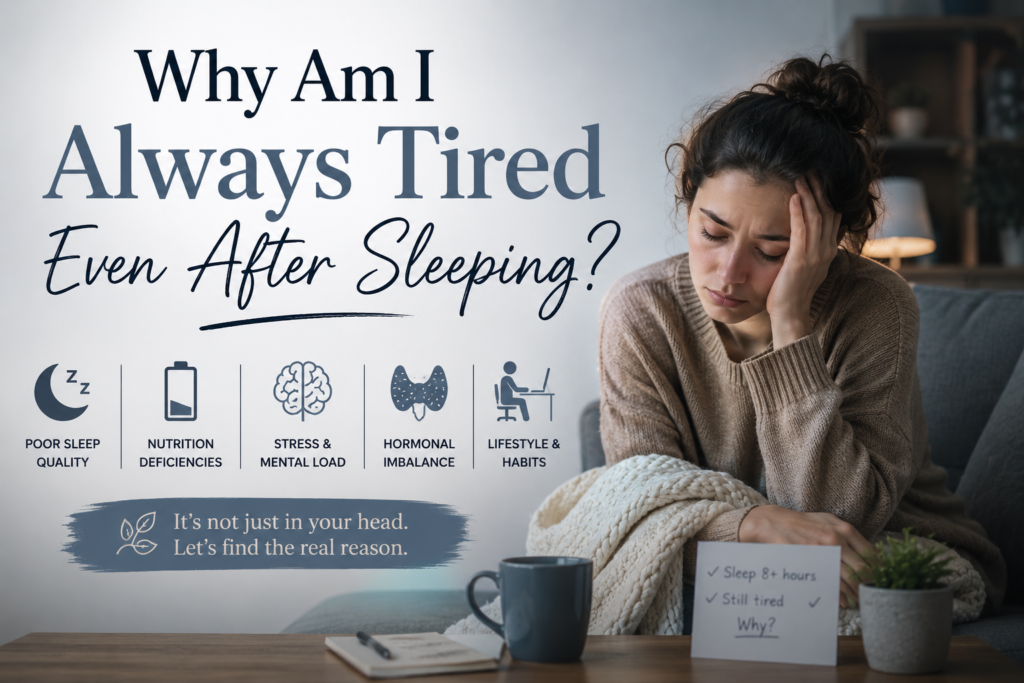
If you’ve ever wondered, “Why am I always tired even after sleeping?”, you’re not alone.
Many people assume that more sleep is the answer. But sometimes, the problem isn’t the number of hours you spend in bed—it’s what your body and mind are doing while you’re asleep.
The truth is, you can be physically resting while emotionally working all night.
Understanding the difference between sleep and true restoration may be the missing piece in your journey toward better health and emotional wellbeing.
Sleep Is Not the Same as Restoration
Sleep is essential, but not all sleep is equally restorative.
Your body may be lying still, yet your nervous system can remain on high alert.
If you’re carrying unresolved stress, emotional overwhelm, or constant mental pressure, your brain may continue processing these experiences long after you’ve closed your eyes.
This can leave you waking up feeling as though you never truly switched off.
Restoration is about more than sleeping.
It is about giving your mind, body, and nervous system permission to recover.
Signs You May Be Experiencing Emotional Exhaustion
Emotional exhaustion often develops gradually, making it easy to mistake it for ordinary tiredness.
You may notice:
- Feeling drained despite getting enough sleep
- Difficulty concentrating
- Lack of motivation
- Increased irritability
- Brain fog
- Feeling emotionally numb
- Waking up already anxious
- Needing caffeine just to function
- Losing interest in activities you once enjoyed
These can be signs that your body needs more than rest—it needs recovery.
You will be also like to read :- What If You Needs Nervous System Healing First?
How Emotional Stress Affects Deep Sleep
Throughout the day, your brain constantly processes thoughts, emotions, responsibilities, and experiences.
When stress remains unresolved, your nervous system may struggle to fully relax at night.
This can affect the quality of your sleep by making it harder to spend enough time in the deeper stages of sleep that support physical and emotional recovery.
People experiencing chronic stress often report:
- Difficulty falling asleep
- Waking frequently during the night
- Vivid dreams
- Feeling alert despite being tired
- Waking up feeling unrefreshed
Your body may be asleep, but your mind may still be working overtime.
Burnout Doesn’t Always Look Like Collapse
Many people imagine burnout as complete physical exhaustion.
In reality, burnout often appears much earlier.
You may still be going to work.
Meeting deadlines.
Taking care of your family.
Smiling through conversations.
Yet inside, you feel depleted.
Burnout is not simply about doing too much.
It often develops when stress continues without enough opportunities for recovery, emotional processing, or self-care.
Ignoring these early signs can make it increasingly difficult for your body to regain balance.
The Role of Your Nervous System in Chronic Fatigue
Your nervous system is designed to help you respond to challenges.
However, when it remains activated for long periods, it can affect how rested and energised you feel.
This ongoing state of alertness may contribute to:
- Mental fatigue
- Muscle tension
- Poor concentration
- Emotional overwhelm
- Sleep disturbances
- Low energy throughout the day
Many people focus only on improving sleep, when what their nervous system truly needs is a sense of safety, calm, and restoration.
Supporting nervous system regulation can play an important role in overall wellbeing.
How Sound Healing Can Support Better Sleep
Sometimes the body doesn’t need more effort.
It needs permission to slow down.
Sound healing uses gentle vibrations and resonant frequencies to encourage relaxation and help create an environment where the nervous system can begin to unwind.
Many participants describe experiencing:
- A calmer mind
- Reduced mental chatter
- Deep relaxation
- Greater emotional ease
- Improved sleep quality
- A sense of inner balance
While individual experiences vary, many people include sound healing as part of a holistic wellness routine that supports relaxation, mindfulness, and emotional wellbeing.
At Skanda Wellbeing, sound healing sessions are designed to create a peaceful space where the body and mind can reconnect with stillness.
Five Evening Rituals That Support Restful Sleep
Small, consistent habits can make a meaningful difference over time.
1. Create a Gentle Digital Sunset
Reduce screen exposure at least one hour before bed.
Bright screens and constant stimulation can make it harder for the brain to transition into rest.
Instead, choose calming activities such as reading, journaling, or quiet reflection.
2. Slow Your Breathing
Gentle breathing exercises can help signal to your body that it is safe to relax.
Try inhaling for four counts and exhaling for six counts for several minutes before sleep.
3. Release the Day
Keep a notebook beside your bed.
Write down lingering thoughts, worries, or tomorrow’s tasks.
This simple practice can reduce mental clutter and create a sense of closure before sleep.
4. Listen to Calming Sound Frequencies
Soft sound healing music or guided relaxation practices can become part of a peaceful bedtime routine, helping create an environment that supports relaxation and emotional balance.
5. Practice Gratitude and Self-Compassion
Rather than ending the day by replaying everything that went wrong, gently acknowledge three moments of gratitude or personal growth.
This simple shift encourages a more peaceful transition into rest.
True Healing Happens When Rest Becomes Restoration
Feeling constantly tired is not always a sign that you need more sleep.
Sometimes, it is your emotional world asking for care.
When emotional stress, burnout, and nervous system dysregulation remain unaddressed, your body may struggle to access the deep restoration it needs.
Healing begins when we stop measuring rest only by the number of hours we sleep and start paying attention to the quality of our inner experience.
You deserve more than simply getting through the day.
You deserve to wake up feeling renewed.
Begin Your Journey Towards Restorative Wellbeing
If emotional exhaustion, burnout, or restless sleep have become part of your daily life, know that change is possible.
At Skanda Wellbeing, we offer holistic wellness practices including sound healing, guided meditation, mindfulness, and therapeutic support designed to help calm the nervous system and encourage deeper relaxation.
Every restful night begins with creating space for healing during the day.
Book a sound healing session, explore our wellbeing programmes, and subscribe to our YouTube channel @SkandaWellbeing for guided relaxation practices that support better sleep and emotional balance.
Frequently Asked Questions
Why do I still feel tired after sleeping for eight hours?
Feeling tired despite getting enough sleep may be influenced by several factors, including stress, poor sleep quality, lifestyle habits, or underlying health conditions. If persistent fatigue continues, it’s important to consult a qualified healthcare professional for assessment.
Can emotional stress affect sleep quality?
Yes. Ongoing emotional stress can make it more difficult for the body and mind to fully relax, which may affect the quality of sleep and how refreshed you feel on waking.
Can sound healing improve sleep?
Many people find that sound healing promotes relaxation and helps them unwind before bedtime. While experiences vary, it can be a valuable part of a holistic sleep and wellness routine.
What is emotional exhaustion?
Emotional exhaustion is a state of feeling emotionally and mentally depleted, often associated with prolonged stress or burnout. It may affect mood, energy, motivation, and overall wellbeing.