What if you could give your mind a break without asking it to stop thinking?
You lie down.
You close your eyes.
A singing bowl rings.
Then another.
A gong begins to resonate. Chimes move gently through the room. Your breathing becomes slower. Your shoulders soften. For a few moments, there is nowhere to go, nothing to achieve and nothing to fix.
This is the experience many people discover through sound healing and sound baths.
And it raises an interesting question:
Is sound healing actually doing something—or does it simply feel relaxing?
The answer is more nuanced than either “it’s magic” or “it’s just music.”
Sound can influence attention, emotion, breathing and physiological arousal. Research on singing bowl-based practices is still developing, but studies have reported changes in tension, mood, anxiety and measures associated with relaxation. A 2025 systematic review identified 19 clinical studies of singing bowls published between 2008 and 2024, while also highlighting the need for stronger research.
That makes sound healing in Dubai an interesting wellness practice to explore—not because it promises a miracle, but because it offers a different doorway into stillness.
Let’s take a closer look.
What Is Sound Healing?
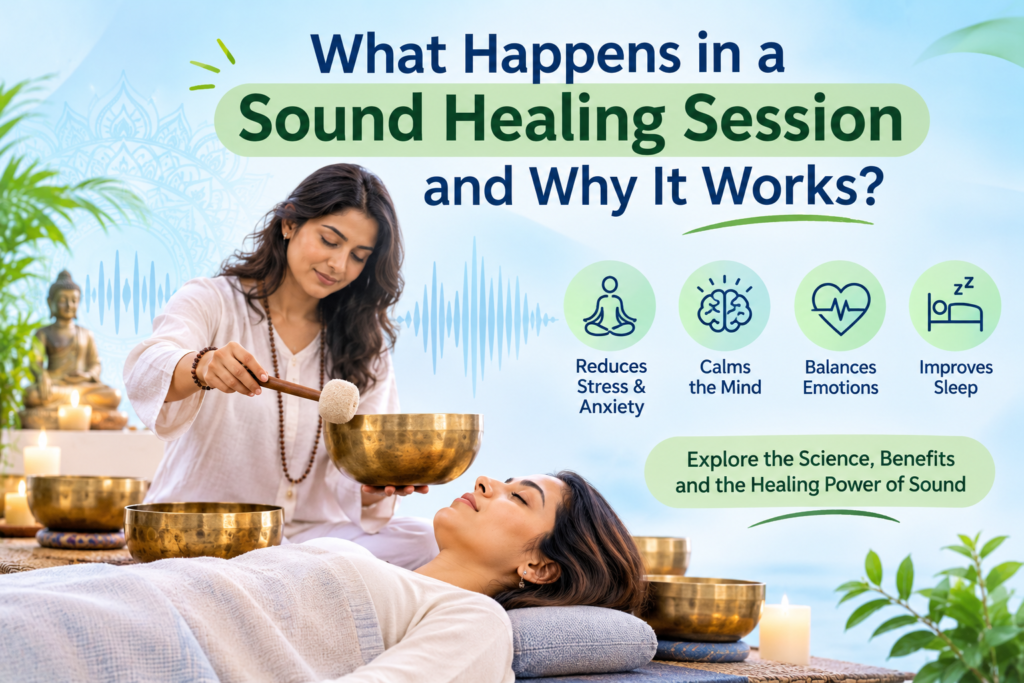
Sound healing is a holistic wellbeing practice that uses sound, rhythm, vibration and focused listening to support relaxation, meditation and inner awareness.
A session may use:
- Tibetan or Himalayan singing bowls
- Crystal singing bowls
- Gongs
- Tuning forks
- Chimes
- Drums
- Rainsticks
- Mantra or vocal toning
- Guided meditation
- Breath awareness
One of the most popular formats is a sound bath.
Despite the name, you aren’t getting into water.
Instead, you are immersed in layers of sound while resting comfortably.
The idea is simple:
You don’t have to actively meditate. You can allow the sound to become the object of your attention.
This may be particularly appealing if sitting silently and “clearing your mind” feels almost impossible.
Sound meditation has been gaining visibility in the UAE wellness scene, with Dubai increasingly offering sound baths, singing bowl sessions and related experiences. The National reported growing interest in sound meditation among UAE residents, describing it as an accessible form of meditation for people seeking relaxation.
You will be also like to read:
Why UAE Companies Are Rethinking Corporate Wellness Beyond Fitness
Why Are People Talking About Sound Healing?
Search behaviour and social conversations tell an interesting story.
The broader online conversation around sound healing and sound baths has expanded significantly, while related searches increasingly focus on benefits, experiences, singing bowls and relaxation. One current keyword-trend dataset estimates substantial global search growth around “sound healing & sound baths,” although third-party search-volume estimates should be treated as directional rather than official Google figures.
YouTube tells another part of the story.
Long-form singing bowl and sound bath videos attract significant viewing behaviour, including multi-hour videos specifically positioned around sleep, relaxation and meditation. One singing-bowl channel’s three-hour video has accumulated nearly two million views, while another eight-hour Tibetan singing bowl video has attracted hundreds of thousands of views.
And on LinkedIn, the conversation is moving beyond:
“Sound baths are relaxing.”
The new question is:
“What actually happens in the nervous system?”
Recent LinkedIn posts repeatedly frame sound healing around nervous-system relaxation, stress management, focus, mindfulness and workplace wellbeing.
That curiosity is exactly where the conversation gets interesting.
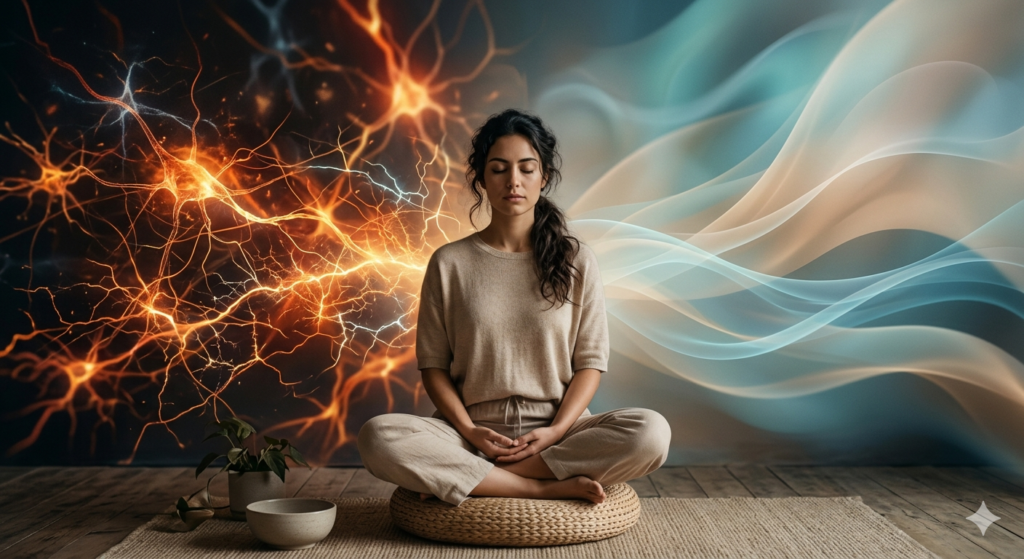
How Does Sound Interact With the Nervous System?
Let’s keep this simple.
Your nervous system is constantly processing information from your environment.
Sound is one of those signals.
When you hear a sudden alarm, your body may immediately become alert.
When you hear a slow, familiar piece of music, you may naturally begin to settle.
The sound hasn’t “fixed” anything.
It has influenced your state of attention and arousal.
A sound bath creates a very different sensory environment from the one many people experience during a busy day.
Instead of:
notifications → conversations → traffic → emails → decisions → deadlines
you have:
sound → breathing → stillness → listening.
That shift can give the mind fewer competing demands.
The sustained tones of singing bowls and other instruments may also encourage focused attention and a meditative state. A small observational study of Tibetan singing bowl meditation found reductions in tension, anger, fatigue and depressed mood immediately after the session, although the researchers described the intervention as feasible rather than establishing it as a medical treatment. Another study examining singing bowl sound massage found changes in EEG measures and reductions in heart rate following the intervention, with participants reporting positive perceptions of wellbeing.
So when someone says:
“I don’t know what happened, but I feel calmer.”
there may be a very ordinary explanation:
They spent sustained time resting, listening, breathing and directing attention away from everyday demands.
But Does Sound Healing Actually Work?
This is where responsible wellness content needs to slow down.
There is promising evidence—but not enough evidence to claim that sound healing can cure diseases or repair the body at a cellular level.
A 2020 systematic review found some positive effects associated with singing bowl interventions, including changes in distress, anxiety, mood, tension and some physiological measures, but concluded that the small number and methodological limitations of the studies prevented firm evidence-based recommendations.
A newer 2025 systematic review identified considerably more clinical research and reported potential benefits relating to anxiety, depression, sleep and cognitive outcomes, while the overall research field remains one that requires further high-quality investigation.
So the most accurate way to describe sound therapy benefits is:
Sound may support relaxation, mindfulness and wellbeing. It should not be presented as a replacement for medical or psychological treatment.
That’s an important distinction.
The Instruments: What Do They Actually Do?
1. Singing Bowls
Singing bowls create sustained tones and overtones when struck or played around their rim.
They are among the most recognisable instruments in singing bowl therapy.
The long resonance gives you something consistent to listen to, making it easier to shift attention away from mental chatter.
2. Crystal Singing Bowls
Crystal bowls produce bright, sustained tones and are commonly used in contemporary sound baths.
Their sound can become an anchor for meditation and focused listening.
3. Gongs
Gongs create a much broader and more layered sound.
Unlike a single sustained bowl tone, a gong can produce a complex field of frequencies and changing overtones.
For many people, this creates an immersive experience.
4. Chimes
Chimes introduce lighter, intermittent tones into the session.
They may be used between longer periods of sustained sound.
5. Tuning Forks
Tuning forks produce relatively precise tones and are used by some practitioners in individual sound therapy sessions.
Their application varies depending on the practitioner’s training and approach.
6. Voice, Mantra and Humming
Sound healing doesn’t always require an instrument.
The human voice can become part of the practice through chanting, mantra, humming or vocal toning.
This can make sound-based mindfulness more accessible because the instrument is already with you.
What Happens During Your First Sound Healing Session?
If you’ve never attended a sound bath in Dubai, you may have no idea what to expect.
And that’s completely normal.
Here’s what a typical experience may look like.
Step 1: You arrive and settle in
You may be invited to sit or lie down comfortably.
Many sessions use yoga mats, cushions, blankets or eye pillows to create a supportive environment.
Step 2: The session begins with grounding
Depending on the practitioner, there may be breathing exercises, guided meditation or a few moments of silence.
The intention is to help you transition from your everyday pace into a quieter state.
Step 3: The sound begins
The practitioner introduces instruments gradually.
You may hear singing bowls first, followed by gongs, chimes or other sounds.
You don’t need to “do” anything.
Your job is simply to listen.
Step 4: You may enter a deeply relaxed state
Some people remain completely awake.
Some become very still.
Some experience vivid imagery.
Some become emotional.
Some fall asleep.
And some simply think:
“That was peaceful.”
There is no correct experience.
Step 5: The session closes gently
The sound gradually settles.
You may be given a few moments to sit quietly, breathe and notice how you feel before returning to your day.
At Skanda Wellbeing, sound healing is described as an experience where clients lie comfortably while therapeutic sounds are used to support relaxation, meditation and emotional release. Both group and individual sessions are available.
Who Is Sound Healing Especially Suited To?
Sound healing may be appealing if you:
- feel mentally overloaded
- find conventional meditation difficult
- want dedicated time to slow down
- are experiencing everyday stress
- want to explore mindfulness
- enjoy music, rhythm or vibration
- are curious about holistic wellbeing
- want a non-verbal relaxation experience
- are exploring emotional self-awareness
- want to create more intentional pauses in your routine
It can also appeal to busy professionals who struggle to switch off.
You don’t necessarily need to sit perfectly still and force your thoughts away.
You simply listen.
That is one reason sound meditation has gained traction among urban wellness audiences.
Sound Healing for the Modern Professional
Consider the modern workday.
Your attention is constantly being fragmented.
Emails.
WhatsApp messages.
Meetings.
Notifications.
Deadlines.
Content.
Calls.
More meetings.
Even when your laptop closes, your brain may still be processing the day.
This is where a practice like sound meditation can become a deliberate transition.
Not:
“I need to be productive.”
But:
“I need to pause.”
Recent LinkedIn conversations are increasingly connecting sound-based practices with workplace wellbeing, stress management and the needs of high-performing professionals. (LinkedIn)
That doesn’t mean a sound bath is a productivity hack.
It means rest itself can become intentional.
What Might You Experience After a Sound Bath?
Everyone responds differently.
You may notice:
Physical:
A feeling of relaxation, heaviness, lightness or reduced muscular tension.
Mental:
Less mental noise or a greater sense of spaciousness.
Emotional:
A feeling of release, calm or reflection.
Meditative:
A deeper sense of stillness or inward attention.
Nothing dramatic:
And that’s completely okay.
A sound healing session isn’t a performance.
You don’t need to have an emotional breakthrough.
You don’t need to see colours.
You don’t need to experience visions.
You don’t even need to believe in energy healing.
You can simply rest.
Sound Healing, Energy Healing and Nervous System Relaxation
This is where different wellness traditions use different language.
Some practitioners describe sound in terms of vibration, energy, chakras and energetic balance.
Others focus on mindfulness, sensory attention and relaxation.
These frameworks don’t have to be presented as competing ideas.
At Skanda Wellbeing, sound healing sits within a broader holistic approach that brings together body, mind, emotional wellbeing and spiritual exploration. Its service description combines sound, vibration and frequency with relaxation, meditation support and energetic wellbeing.
The key is to understand what is being claimed.
A sound bath can provide a deeply immersive relaxation experience.
Claims that a particular frequency can medically treat a specific disease or “repair” specific organs require much stronger evidence.
Is Sound Healing Safe?
For many people, sound healing is a gentle wellbeing practice.
But gentle doesn’t mean universally appropriate.
If you have a medical condition, hearing sensitivity, a history of sound-triggered distress, are pregnant, or have another concern that could affect your participation, speak with an appropriate healthcare professional and tell the practitioner before your session.
You should also feel comfortable asking:
- What instruments will be used?
- How loud will the session be?
- Can I move or leave if I become uncomfortable?
- Is the session individual or group?
- What training does the practitioner have?
- What should I expect during and after the session?
A good wellness experience should leave room for questions.
Sound Healing in Dubai: Why Now?
Dubai is a city that rarely stops.
The pace is fast.
The environment is stimulating.
And wellness itself has become increasingly integrated into the city’s lifestyle.
UAE media has reported the rise of sound meditation as residents look for accessible ways to slow down and disconnect from everyday noise. More recent Dubai wellness coverage describes sound baths as an increasingly visible part of the city’s wellness landscape.
That makes the appeal easy to understand.
Sometimes you don’t need another app.
Another productivity system.
Another podcast.
Another piece of advice.
Sometimes you need 60 minutes where nobody is asking you for anything.
Your First Sound Bath: 7 Things to Know
1. You don’t need meditation experience.
Come exactly as you are.
2. You don’t need to understand every instrument.
Just listen.
3. You don’t have to force relaxation.
Allow it to happen naturally.
4. You may fall asleep.
That’s okay.
5. You may experience emotions.
That’s okay too.
6. You don’t need to believe every spiritual explanation.
You can simply experience the practice.
7. Give yourself time afterward.
If possible, don’t rush straight from a sound bath into another high-stimulation activity.
Let the quiet stay with you for a little while.
The Bigger Question Isn’t “Does Sound Heal?”
Perhaps a better question is:
“What happens when I finally create enough quiet to hear myself?”
That is the heart of sound healing.
The bowls don’t need to promise miracles.
The gong doesn’t need to cure anything.
The session doesn’t need to be dramatic.
Sometimes the value is much simpler.
You pause.
You breathe.
You listen.
Your attention comes back to the present.
And for a little while, the outside world becomes quieter.
In a city that never seems to stop, that can be powerful in itself.
Ready to Experience Sound Healing in Dubai?
If you’ve been searching for:
sound healing Dubai
sound therapy benefits
singing bowl therapy
sound bath Dubai
nervous system relaxation
holistic healing Dubai
energy healing UAE
perhaps the next step isn’t another article.
Perhaps it’s experiencing the practice for yourself.
At Skanda Wellbeing, Sound Healing Therapy combines therapeutic sound, singing bowls, gongs, chimes and voice within a supportive environment designed for relaxation, meditation and inner awareness. Individual and group sessions are available.
You don’t have to know exactly what you’re looking for.
You can simply begin with a question.
“Could sound help me slow down?”
Want to know if a sound healing session is right for you?
DM “SOUND” to Skanda Wellbeing or book a session directly.
Your nervous system doesn’t always need another instruction.
Sometimes, it needs a moment of quiet.
And sometimes, that quiet begins with a sound.