Exploring sound healing research, brainwaves, and meditation therapy through a science-informed lens
Imagine lying down in a quiet room while the gentle vibrations of a singing bowl fill the space. Within minutes, your breathing slows, your thoughts become less chaotic, and your body begins to feel noticeably lighter.
Many people describe sound healing as deeply calming—but a common question remains:
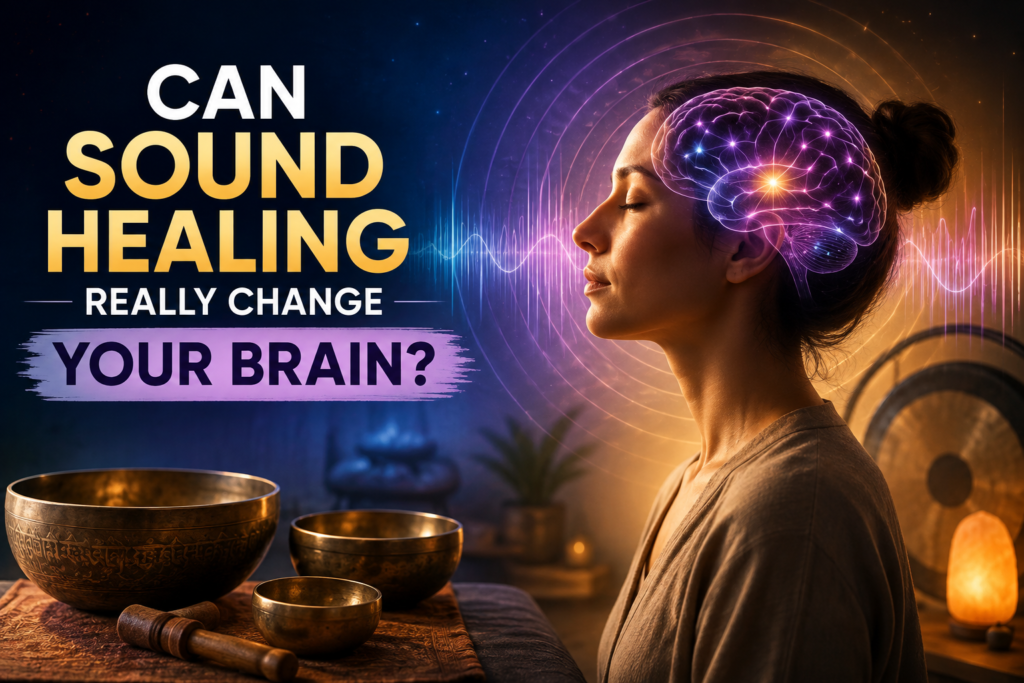
Can sound healing really change your brain, or is it simply a pleasant relaxation experience?
At Skanda Wellbeing, we believe holistic healing should be approached with both ancient wisdom and modern understanding. The growing field of sound healing research, brainwave science, and meditation therapy offers fascinating insights into how sound may influence the mind, body, and nervous system.
The short answer is: sound healing is not magic, but science suggests that sound and vibration can influence brain activity, stress response, and emotional regulation in meaningful ways.
What Is Sound Healing?
Sound healing uses vibrational frequencies, resonance, rhythm, and intentional sound patterns to support relaxation, emotional balance, and nervous system regulation.
Common sound healing instruments include:
- Tibetan singing bowls
- Crystal singing bowls
- Gongs
- Tuning forks
- Chimes
- Drums
- Vocal toning and chanting
The goal is not simply to “hear” sound, but to allow the body and mind to respond to specific frequencies and rhythmic patterns.
Understanding Brainwaves
To understand why sound healing may affect the brain, we first need to understand brainwaves.
Your brain is constantly producing electrical activity, measured in hertz (Hz). Different brainwave patterns are associated with different mental states.
Beta Waves (13–30 Hz)
- Active thinking
- Problem-solving
- Focused attention
- Often dominant during busy workdays
Alpha Waves (8–12 Hz)
- Relaxed awareness
- Light meditation
- Calm focus
- Creative thinking
Theta Waves (4–7 Hz)
- Deep meditation
- Emotional processing
- Dream-like states
- Enhanced introspection
Delta Waves (0.5–3 Hz)
- Deep restorative sleep
- Physical recovery
- Profound relaxation
One of the most interesting areas of sound healing research is whether rhythmic sound can help the brain shift from high-alert beta activity toward calmer alpha and theta states.
What Science Says About Sound and the Brain
While research is still evolving, several studies suggest that sound-based meditation practices may influence brainwave activity, stress hormones, heart rate variability, and emotional wellbeing.
Researchers have observed that meditative sound experiences can be associated with:
- Increased alpha brainwave activity
- Reduced subjective stress and anxiety
- Improved mood
- Enhanced relaxation
- Greater feelings of emotional calm
- Improved mindfulness and present-moment awareness
Importantly, scientists are careful not to claim that sound healing “rewires the brain overnight.” However, repeated relaxation practices can contribute to neuroplasticity—the brain’s ability to form new patterns and connections over time.
The Role of Brainwave Entrainment
One proposed mechanism is brainwave entrainment.
This occurs when external rhythmic stimuli—such as sound pulses, drumming, or repetitive tones—encourage the brain to synchronize with a particular rhythm.
For example:
- Slow, steady rhythms may encourage alpha and theta activity
- Repetitive sound patterns can reduce mental chatter
- Sustained tones may help the nervous system shift toward a more relaxed state
This is similar to how music naturally influences mood, energy, and attention.
Why Sound Feels Different From Silence
Many people struggle with traditional meditation because silence allows racing thoughts, worries, and mental noise to become more noticeable.
Sound can provide a gentle anchor for attention.
Instead of fighting thoughts, the mind has something soothing to focus on:
- The resonance of a bowl
- The vibration of a gong
- The rhythm of the breath combined with sound
- The subtle fading of a tone
This is why meditation therapy combined with sound often feels more accessible for beginners who find silent meditation frustrating.
The Nervous System Connection
The brain does not operate in isolation. It is constantly communicating with the nervous system.
When you experience chronic stress, your body may remain in a state of fight, flight, freeze, or fawn response. This can lead to:
- Muscle tension
- Shallow breathing
- Overthinking
- Emotional reactivity
- Difficulty relaxing
- Sleep disturbances
Sound healing sessions often encourage:
- Slower breathing
- Reduced muscle tension
- Increased body awareness
- Feelings of safety and calm
- Activation of the parasympathetic nervous system
This is one reason many people report feeling deeply rested after a sound healing session, even if they did not fall asleep.
Can Sound Healing Improve Emotional Wellness?
Emotional experiences are closely connected to physiological states.
When the nervous system becomes calmer, people often find it easier to:
- Reflect without becoming overwhelmed
- Process emotions more gently
- Feel connected to their body
- Reduce emotional reactivity
- Experience greater emotional resilience
While sound healing is not a replacement for medical or psychological treatment when needed, it may serve as a valuable complementary practice for emotional wellness, stress management, and nervous system support.
What Happens During a Sound Healing Session?
A typical session may include:
Gentle Grounding
Participants are invited to settle into a comfortable position and focus on their breath.
Resonant Sound
Instruments such as singing bowls or gongs are played in a slow, intentional sequence.
Deep Relaxation
As attention shifts from thoughts to sound and vibration, the body often enters a more relaxed state.
Quiet Integration
A few moments of silence allow the nervous system to absorb the experience before returning to normal activity.
Many people describe sensations such as:
- Warmth
- Heaviness or lightness
- Tingling
- Emotional release
- Mental clarity
- Profound calm
What Sound Healing Cannot Do
Responsible wellness education is important.
Sound healing should not be presented as a guaranteed cure for:
- Depression
- Anxiety disorders
- Trauma
- Neurological conditions
- Chronic medical illnesses
What it may offer is supportive space for:
- Relaxation
- Stress reduction
- Mindfulness
- Emotional regulation
- Sleep support
- Meditation enhancement
- Nervous system calming
The most balanced view is to see sound healing as a supportive therapeutic wellness practice rather than a miracle solution.
A Simple Sound Meditation You Can Try
You do not need specialized equipment to begin exploring the benefits of sound.
3-Minute Sound Awareness Practice
- Sit comfortably.
- Close your eyes.
- Play a gentle singing bowl recording or calming ambient sound.
- Focus only on:
- The beginning of the sound
- The vibration while it lasts
- The moment it fades into silence
- If thoughts arise, gently return your attention to the sound.
Notice how your body feels after just a few minutes.
Why Consistency Matters
Just as exercise strengthens the body gradually, practices that support brainwave regulation and nervous system balance tend to work best when experienced consistently.
Regular meditation therapy and sound-based relaxation practices may help cultivate:
- Greater emotional resilience
- Improved stress management
- Better sleep quality
- Increased self-awareness
- A stronger sense of inner calm
The transformation is often subtle, cumulative, and deeply personal.
The Bigger Picture: Science and Ancient Wisdom
Ancient cultures have used sound for healing, ritual, meditation, and emotional restoration for thousands of years. Modern neuroscience is only beginning to explore why these practices may have been so enduring.
The emerging evidence suggests that sound can influence:
- Attention
- Breath
- Heart rhythm
- Stress response
- Brainwave patterns
- Emotional state
This does not diminish the mystery of the human experience—it simply provides a fascinating bridge between traditional healing practices and contemporary scientific inquiry.
Final Thoughts
So, can sound healing really change your brain?
The most evidence-based answer is:
Sound healing may not instantly transform your brain, but research suggests that sound, rhythm, and meditative vibration can influence brainwave activity, nervous system regulation, stress response, and emotional wellbeing in meaningful ways.
For many people, the real question is not whether sound healing performs a miracle, but whether it helps them experience a calmer mind, a more balanced body, and a deeper sense of inner peace.
Sometimes healing begins not with forcing the mind to be quiet, but with giving it a gentler frequency to follow.
Explore More from Skanda Wellbeing
At Skanda Wellbeing, we share insights on sound healing research, brainwaves, meditation therapy, nervous system healing, emotional wellness, mindfulness, hypnotherapy, and holistic wellbeing practices that support a healthier connection between mind, body, and soul.