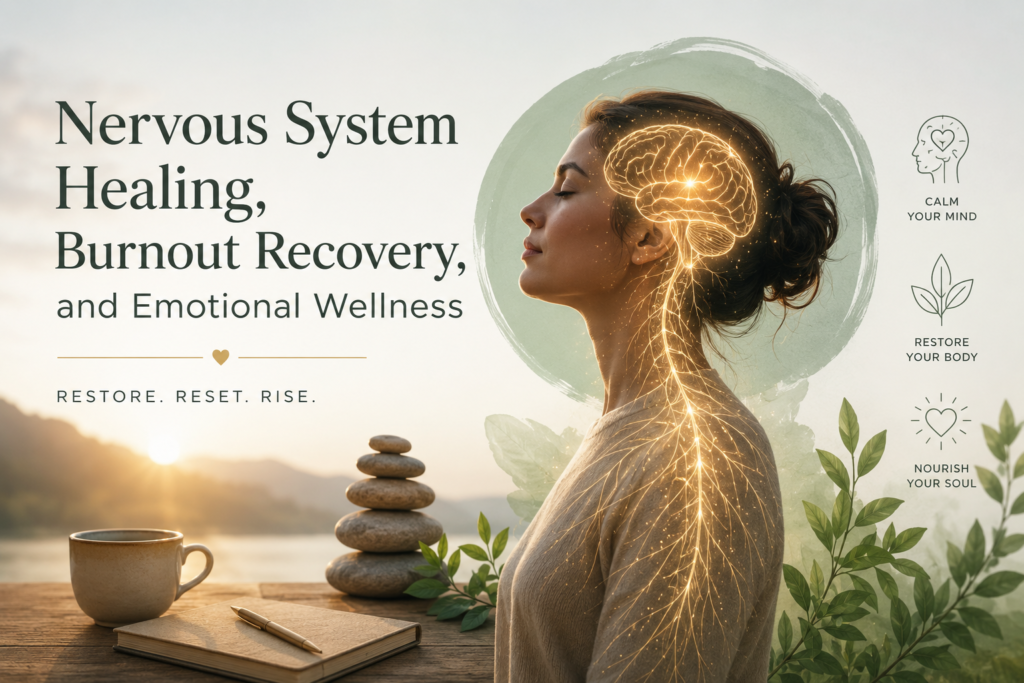
The hidden connection between nervous system healing, burnout recovery, and emotional wellness
You finally sit down after a long day. The laptop is closed. The phone is on silent. The house is quiet.
But your body still feels on edge.
Your shoulders remain tight. Your mind keeps replaying conversations. Your heart feels slightly restless. You’re technically resting, yet you don’t feel relaxed.
If this sounds familiar, you are not alone. One of the most common concerns in today’s fast-paced world is “Why can’t I switch off, even when nothing is happening?”
The answer often has less to do with laziness, lack of sleep, or productivity—and more to do with nervous system dysregulation.
Rest Is Not the Same as Relaxation
Many people assume that sitting on the couch, watching a show, scrolling through social media, or sleeping for a few hours automatically means their body is recovering.
However, physical inactivity does not guarantee nervous system healing.
Your body can remain in a state of chronic stress response even when you are not actively working. This is why someone can:
- Sleep 8 hours and wake up exhausted
- Take a vacation and still feel anxious
- Spend a weekend at home and return to work feeling emotionally drained
- Constantly seek rest but never feel truly restored
This is often a sign that the fight-or-flight system has been activated for too long.
What Is Nervous System Dysregulation?
Your nervous system is designed to protect you from danger. When you experience stress, pressure, conflict, trauma, overwhelm, or prolonged emotional tension, your body releases stress hormones such as cortisol and adrenaline.
In short bursts, this is helpful.
The problem arises when the body begins to treat emails, deadlines, financial pressure, relationship conflict, perfectionism, or unresolved emotional wounds as ongoing threats.
Over time, the nervous system may struggle to return to a calm, regulated state.
This can lead to:
- Constant alertness
- Difficulty relaxing
- Irritability
- Emotional reactivity
- Fatigue
- Sleep disturbances
- Digestive discomfort
- Feeling “wired but tired”
7 Signs Your Body Is Stuck in Survival Mode
1. You Feel Tired but Can’t Sleep
Your body is exhausted, but your mind refuses to slow down. Racing thoughts and nighttime anxiety are common signs of an overactivated nervous system.
2. Small Problems Feel Overwhelming
Minor inconveniences trigger disproportionately large emotional reactions because your stress capacity is already overloaded.
3. Your Muscles Stay Tight
Chronic tension in the neck, shoulders, jaw, or lower back is often the body’s way of holding unresolved stress.
4. You Need Constant Distraction
If silence feels uncomfortable and you constantly reach for your phone, television, work, or social media, your nervous system may be avoiding stillness.
5. You Wake Up Feeling Unrested
This is one of the clearest indicators that sleep quality and nervous system recovery are not the same thing.
6. You Feel Emotionally Numb
Burnout does not always look like crying or panic attacks. Sometimes it looks like feeling nothing at all.
7. Relaxation Feels Unfamiliar
Many high achievers unconsciously associate slowing down with guilt, laziness, or loss of control.
The Hidden Link Between Burnout and Emotional Wellness
Burnout is often discussed as a workplace issue, but it is deeply connected to emotional wellness.
People who struggle with burnout frequently carry patterns such as:
- People-pleasing
- Perfectionism
- Fear of disappointing others
- Difficulty setting boundaries
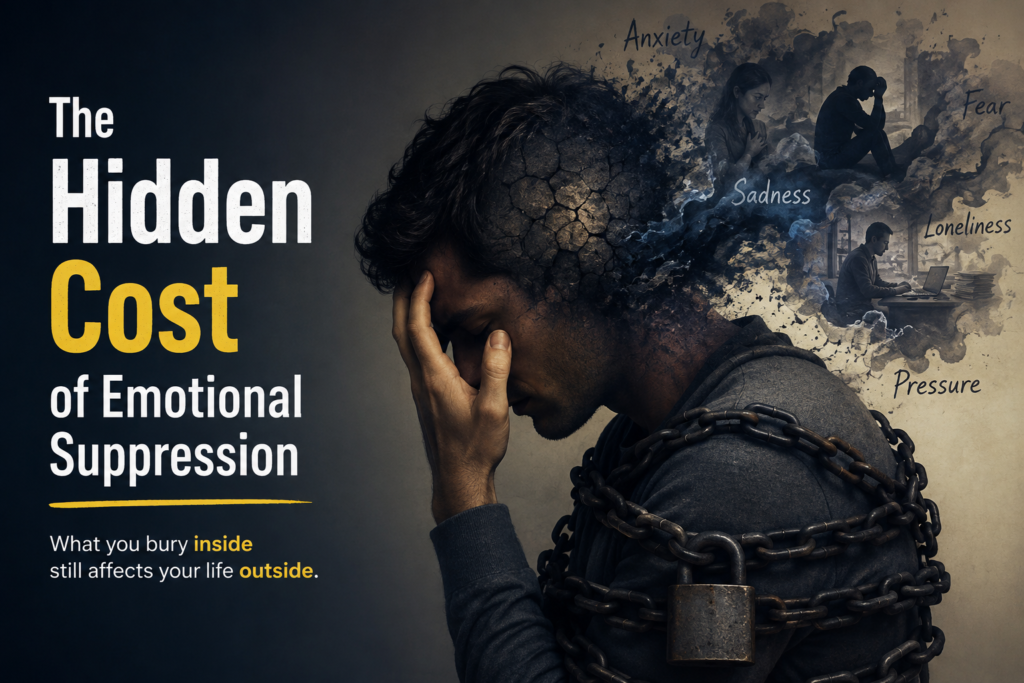
- Suppressing emotions
- Constant self-criticism
When emotions are repeatedly ignored, the body often becomes the messenger.
This is why burnout recovery requires more than time off. It requires creating safety within the nervous system.
Why “Just Relax” Doesn’t Work
Telling someone with a dysregulated nervous system to “relax” is similar to telling a smoke alarm to “be quiet” while it still detects smoke.
The body needs signals of safety, not just instructions.
Effective nervous system healing focuses on:
- Breath regulation
- Gentle movement
- Emotional awareness
- Mindfulness practices
- Sound healing and relaxation techniques
- Restorative meditation
- Healthy boundaries
- Supportive relationships
- Processing unresolved emotional stress
A Simple 60-Second Reset
When you notice your body feeling tense even while resting, try this:
Breathe In — 4 Seconds
Inhale slowly through your nose.
Hold — 4 Seconds
Allow the breath to settle.
Exhale — 6 Seconds
Exhale gently through your mouth.
Repeat this for one minute while placing one hand on your chest and one on your abdomen.
Longer exhales help activate the parasympathetic nervous system, the part responsible for rest, digestion, and recovery.
Healing Is About Regulation, Not Perfection
A common misconception is that nervous system healing means becoming calm all the time.
It doesn’t.
True healing means your body becomes better at:
- Recovering after stress
- Returning to balance more quickly
- Feeling safe in moments of stillness
- Responding rather than reacting
- Experiencing rest without guilt
This is a gradual process, not a single breakthrough moment.
Daily Practices That Support Nervous System Healing
Morning
- Avoid checking your phone for the first 10 minutes
- Take 5 slow breaths
- Spend a few moments in natural light
During the Day
- Pause between tasks
- Relax your jaw and shoulders
- Notice when you are holding your breath
Evening
- Reduce stimulation before sleep
- Listen to calming sound frequencies or gentle meditation
- Reflect on one thing your body did well today
Small, consistent practices are often more effective than occasional intense self-care routines.
When Rest Still Doesn’t Feel Restful
If you have tried sleeping more, taking breaks, exercising, or distracting yourself, yet your body continues to feel tense, exhausted, or emotionally overwhelmed, it may be worth exploring deeper nervous system support and emotional healing practices.
Many people discover that the issue is not a lack of effort—it is a lack of regulation, restoration, and emotional safety.
Final Thoughts
Your body is not failing you.
If you cannot relax even when you are resting, your nervous system may be communicating that it has been carrying too much for too long.
The good news is that nervous system healing is possible.
With awareness, compassionate self-observation, restorative practices, and the right support, it is possible to move from constant survival mode to a calmer, more balanced state of emotional wellness.
Sometimes the first step is simply recognizing that exhaustion is not always a sign that you need to push harder—it may be a sign that your mind and body are asking for a different kind of healing.
Explore More from Skanda Wellbeing
At Skanda Wellbeing, we share insights on nervous system healing, burnout recovery, emotional wellness, meditation, sound healing, and holistic wellbeing practices designed to support a calmer mind, a balanced body, and a more resilient life.
🌿 skandawellbeing