
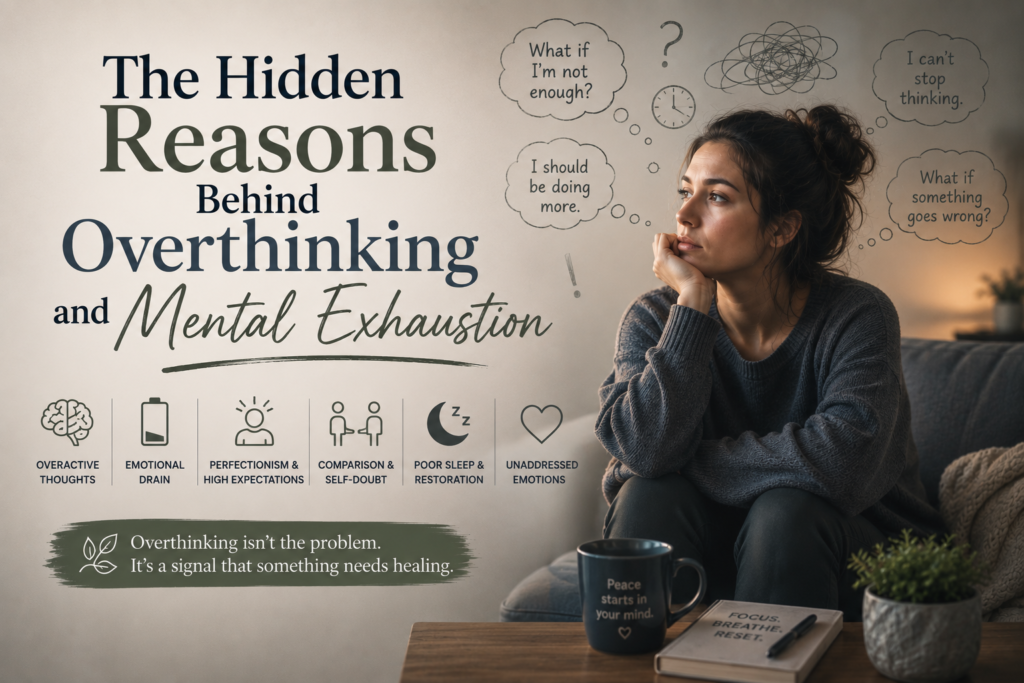
Why Can’t I Switch Off My Mind? The Hidden Reasons Behind Overthinking and Mental Exhaustion
Have you ever climbed into bed, exhausted after a long day, only to find your mind suddenly wide awake?
The conversations replay.
The “what ifs” multiply.
Tomorrow’s worries begin before today has even ended.
If this sounds familiar, you’re not alone.
Many people believe they simply need to “think less” or “stay positive.” But overthinking is rarely a problem of weak willpower. More often, it is your nervous system asking for safety after spending too long in survival mode.
Your mind isn’t working against you—it is trying to protect you.
The good news? Once you understand what’s happening beneath the surface, healing becomes possible.
Your Nervous System: The Silent Driver Behind Overthinking
Your nervous system constantly scans your environment for signs of safety or danger.
When life becomes filled with deadlines, emotional stress, unresolved trauma, relationship conflicts, financial worries, or constant digital stimulation, your nervous system can remain on high alert.
This “fight, flight, or freeze” response was designed to protect us during genuine danger. However, modern stress often keeps this protective system switched on for days, weeks, or even months.
When this happens, your brain continues searching for potential threats—even when you’re physically safe.
This often appears as:
- Constant overthinking
- Racing thoughts before sleep
- Difficulty relaxing
- Feeling mentally exhausted
- Becoming easily overwhelmed
- Increased anxiety
- Trouble concentrating
- Feeling emotionally drained despite getting enough rest
Your body is asking for regulation—not more pressure to “stop thinking.”
Signs Your Nervous System May Be Overwhelmed
Many people ignore the early signals because they seem normal in today’s busy world.
You may notice:
- You feel tired but cannot sleep.
- Your mind constantly jumps from one worry to another.
- Small problems feel much bigger than they are.
- You struggle to enjoy moments of peace.
- You always feel like you should be doing something.
- You experience muscle tension, headaches, or shallow breathing.
- Relaxation feels uncomfortable instead of peaceful.
These are often signs that your nervous system has forgotten what calm feels like.
Why Traditional Relaxation Techniques Sometimes Don’t Work
You may have already tried:
- Positive thinking
- Deep breathing
- Meditation
- Reading before bed
- Listening to calming music
Yet your thoughts continue racing.
This doesn’t mean you’ve failed.
It simply means your body may still be operating in survival mode.
When the nervous system is highly activated, the thinking brain becomes less effective. You cannot always “think” your way into feeling safe.
The body must first experience safety before the mind can become quiet.
Healing works from the body upward—not just from the mind downward.
The Connection Between Stress Hormones and Racing Thoughts
When your brain senses ongoing stress, it releases hormones such as cortisol and adrenaline.
These hormones prepare your body to stay alert by increasing:
- Mental activity
- Heart rate
- Muscle tension
- Vigilance
- Emotional sensitivity
While these responses are helpful during genuine emergencies, they become exhausting when activated continuously.
Over time, this constant state of alertness can contribute to:
- Mental fatigue
- Anxiety
- Difficulty sleeping
- Emotional overwhelm
- Persistent overthinking
Learning to regulate the nervous system can help interrupt this cycle and create space for greater emotional balance.
How Sound Healing Supports Nervous System Regulation
Healing doesn’t always begin with doing more.
Sometimes, it begins by allowing the body to remember stillness.
Sound healing uses carefully created vibrations and frequencies to encourage deep relaxation and support the body’s natural calming response.
Many people describe feeling:
- A quieter mind
- Reduced mental chatter
- Deep physical relaxation
- Emotional release
- Improved sleep quality
- Greater inner clarity
Rather than forcing the mind to become silent, sound healing creates an environment where the nervous system feels safe enough to soften naturally.
At Skanda Wellbeing, sound healing is approached as a gentle practice that supports emotional wellness, mindfulness, and inner balance. While experiences vary from person to person, many individuals find it a valuable complement to their overall self-care routine.
Practical Techniques to Calm an Overactive Mind
You don’t have to wait until you’re overwhelmed.
Small daily practices can gently support nervous system healing over time.
1. Slow Your Exhale
A longer exhale can encourage your body to shift toward a calmer state.
Try inhaling for four counts and exhaling for six.
Repeat for five minutes.
2. Reduce Evening Stimulation
Your brain needs time to transition from activity to rest.
An hour before bed, consider reducing screen time, dimming lights, and choosing calming activities such as gentle stretching, journaling, or quiet reflection.
3. Spend Time in Silence
Even five minutes without constant notifications or background noise allows your nervous system to reset.
Silence is not empty—it creates space for healing.
4. Practice Grounding
Bring your attention to the present moment by noticing:
- Five things you can see
- Four things you can touch
- Three things you can hear
- Two things you can smell
- One thing you can taste
This simple exercise helps shift attention away from spiralling thoughts and back into the present.
5. Experience Restorative Sound Healing
Many people find that regular sound healing sessions help them create intentional moments of stillness, making it easier to unwind, reconnect with themselves, and support emotional wellness.
Consistency often matters more than intensity.
Healing Is Not About Stopping Your Thoughts
The goal is not to eliminate thinking.
It is to create enough inner safety that your mind no longer feels the need to stay on constant alert.
When the nervous system begins to feel supported, many people notice that clarity replaces confusion, calm replaces urgency, and rest becomes more accessible.
Your mind has been working hard to protect you.
Perhaps it doesn’t need to work harder.
Perhaps it simply needs permission to rest.
Begin Your Journey Towards Inner Calm
If overthinking, anxiety, or mental exhaustion have become part of your daily life, remember that you don’t have to navigate it alone.
At Skanda Wellbeing, we offer holistic practices including sound healing, meditation, and mindful wellness experiences that support emotional balance and nervous system regulation.
Every healing journey begins with a single moment of choosing yourself.
Take that first step today.
Explore our healing sessions, subscribe to our YouTube channel @SkandaWellbeing for guided wellness practices, and discover how small moments of calm can create lasting transformation.
Frequently Asked Questions
Is overthinking a sign of anxiety?
Not always. While anxiety can contribute to overthinking, racing thoughts may also be linked to chronic stress, emotional overwhelm, or an overstimulated nervous system.
Can sound healing help reduce overthinking?
Many people find that sound healing promotes deep relaxation and supports emotional wellness. It may help create a calmer mental state as part of a broader self-care practice.
How long does it take to calm the nervous system?
Everyone’s journey is unique. Regular restorative practices such as meditation, mindful breathing, sound healing, quality sleep, and stress management can support gradual nervous system regulation over time.