
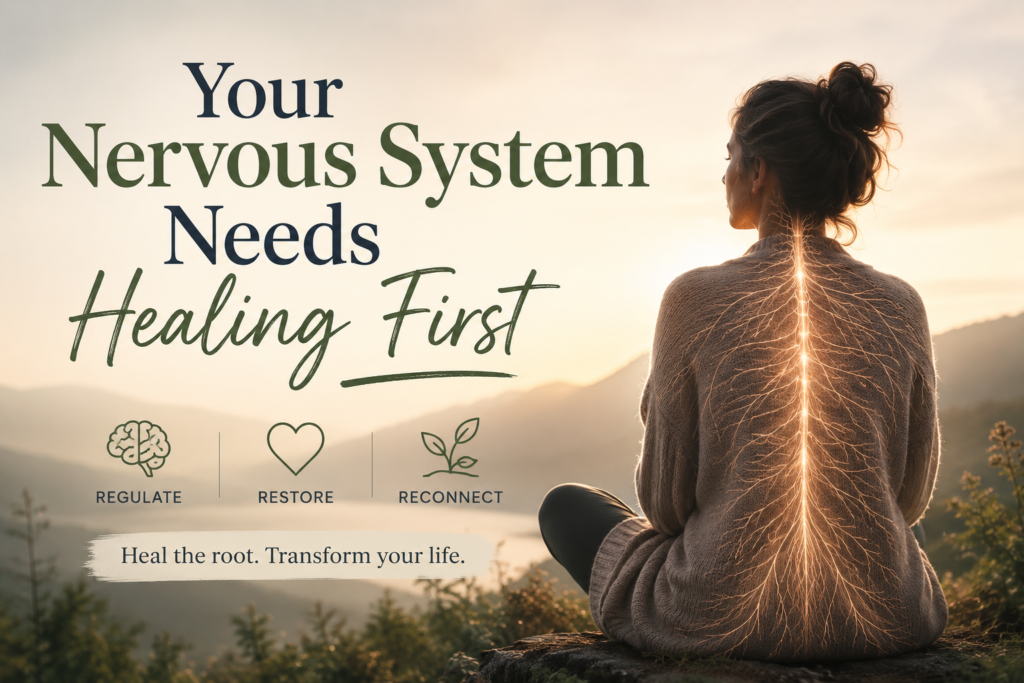
Meditation Isn’t Working for Me — What If You Needs Nervous System Healing First?
When Stillness Feels Impossible, It May Not Be Your Mind—It May Be Your Nervous System
“If meditation feels impossible, your nervous system may be asking for support rather than silence.”
You sit down to meditate.
You close your eyes.
Within seconds, your thoughts begin racing.
Your to-do list appears.
Old conversations replay.
Your body feels restless.
You check the clock.
Five minutes feel like an hour.
Eventually, you conclude:
“I’m just bad at meditation.”
If you’ve ever felt this way, you’re far from alone.
One of the biggest myths about meditation is that your mind should become instantly quiet.
In reality, meditation doesn’t require a perfectly silent mind—it requires a nervous system that feels safe enough to slow down.
When your body has been living in survival mode, stillness can actually feel unfamiliar, uncomfortable, or even overwhelming.
The problem isn’t that you’re doing meditation wrong.
The problem may be that your nervous system needs care before your mind can settle.
Why Some People Find Meditation So Difficult
Meditation is often presented as something simple:
“Just focus on your breath.”
“Clear your mind.”
“Be present.”
But for many people, these instructions feel almost impossible.
Why?
Because the brain isn’t only responding to the present moment.
It’s also responding to how safe—or unsafe—the nervous system feels.
When the nervous system is overstimulated by ongoing stress, unresolved emotions, burnout, or constant pressure, sitting quietly can actually make you more aware of the internal noise that’s been there all along.
Instead of peace, you experience:
- Racing thoughts
- Restlessness
- Anxiety
- Emotional discomfort
- Impatience
- Frustration
- The urge to stop meditating altogether
This doesn’t mean meditation has failed.
It simply means your body is asking for a gentler place to begin.
Understanding the Nervous System’s Survival Responses
Your nervous system is designed to keep you safe.
When it senses stress or perceived danger, it automatically activates protective responses.
These responses are natural and deeply human.
Fight
You may become irritable, defensive, or constantly busy.
The body prepares to confront perceived threats.
Flight
You stay busy all the time.
Your mind races.
Relaxation feels uncomfortable because you’re always planning the next task.
Freeze
You feel emotionally shut down, disconnected, or unable to make decisions.
Even small tasks can feel overwhelming.
Fawn
You constantly prioritise other people’s needs.
You struggle to say no.
You seek approval while neglecting your own wellbeing.
These survival responses are not personality flaws.
They are intelligent adaptations that once helped protect you.
However, when they remain active long after the original stress has passed, they can make meditation feel difficult because your nervous system is still searching for safety.
Why Silence Can Feel Uncomfortable
Many people expect silence to feel peaceful.
But for someone living with chronic stress or emotional overwhelm, silence may bring heightened awareness of thoughts and emotions that have been pushed aside throughout the day.
The moment external distractions disappear, the nervous system begins revealing what it has been carrying.
This is why meditation can sometimes feel harder before it feels easier.
Your mind isn’t becoming louder.
You’re simply noticing what has always been there.
Why Sound Healing Can Feel Easier Than Meditation
For beginners, complete silence isn’t always the most supportive place to start.
This is where sound healing can offer a gentle bridge.
Rather than asking you to quiet your thoughts through effort alone, sound healing creates an immersive environment that encourages relaxation through soothing vibrations and resonant frequencies.
Many people describe experiencing:
- A calmer mental state
- Reduced emotional tension
- Deep physical relaxation
- Greater ease in focusing
- A sense of inner spaciousness
- Improved readiness for meditation
While experiences vary, many individuals find that sound healing helps create conditions where meditation feels more accessible and less intimidating.
Instead of forcing stillness, the body gradually remembers it.
Meditation and Sound Healing: Better Together
Meditation and sound healing are not competing practices.
They complement one another beautifully.
Sound healing can help prepare the nervous system by encouraging relaxation, while meditation supports greater awareness, presence, and emotional resilience over time.
Together, they create a holistic approach to wellbeing.
Many people find that after experiencing regular sound healing sessions, they are better able to:
- Focus during meditation
- Sit comfortably for longer
- Notice fewer racing thoughts
- Feel more emotionally balanced
- Develop a consistent mindfulness practice
Progress often comes from gentle consistency rather than striving for perfection.
A Beginner’s Roadmap to Nervous System Regulation
If meditation has felt frustrating, try shifting your goal from “emptying your mind” to “supporting your nervous system.”
Step 1: Let Go of Perfection
There is no perfect meditation.
Every wandering thought is an opportunity to gently return your attention without judgment.
Step 2: Start Small
Begin with just five minutes a day.
Consistency is far more beneficial than long, infrequent sessions.
Step 3: Focus on the Body First
Notice your breathing, the sensation of your feet on the floor, or the rhythm of calming sounds.
Grounding in physical sensations can make mindfulness feel more approachable.
Step 4: Explore Sound Healing
Allow sound to become your anchor.
Instead of struggling against your thoughts, gently return your awareness to the soothing vibrations around you.
Step 5: Build a Daily Ritual
Create a calming evening or morning routine that may include:
- Gentle stretching
- Mindful breathing
- Journaling
- Sound healing
- Short guided meditation
- Quiet reflection
Small rituals repeated consistently help create lasting change.
Meditation Is a Practice, Not a Performance
You don’t have to stop thinking to meditate.
You don’t have to “do it perfectly.”
You don’t have to force your mind into silence.
Meditation is not about controlling your thoughts.
It is about changing your relationship with them.
When your nervous system begins to feel supported, stillness becomes less intimidating and more inviting.
Healing doesn’t begin with perfect focus.
It begins with self-compassion.
Begin Your Journey Towards Calm
If you’ve struggled with meditation, know that you’re not failing.
Your mind may simply be asking for a gentler path toward healing.
At Skanda Wellbeing, we combine sound healing, meditation, mindfulness, and holistic wellbeing practices to support nervous system regulation and create space for deep relaxation.
Whether you’re new to meditation or returning after frustration, every small step you take is a step towards greater balance.
Explore our sound healing sessions, guided meditation experiences, and subscribe to our YouTube channel @SkandaWellbeing for practices that help you reconnect with calm—one breath, one sound, and one moment at a time.
Frequently Asked Questions
Why is meditation so difficult for beginners?
Many beginners find meditation challenging because the mind naturally wanders. Stress, emotional overwhelm, and an activated nervous system can also make it harder to relax and focus. With regular practice and realistic expectations, meditation often becomes more comfortable over time.
Can sound healing help with meditation?
Many people find that sound healing creates a calming environment that supports relaxation and helps them ease into meditation. Individual experiences vary, but it can be a helpful complement to a mindfulness practice.
What is nervous system regulation?
Nervous system regulation refers to supporting the body’s ability to respond to stress and return to a balanced, calmer state. Practices such as mindful breathing, meditation, gentle movement, quality sleep, and sound healing may contribute to overall emotional wellbeing.
Is it normal for my mind to wander during meditation?
Yes. A wandering mind is a natural part of meditation. The practice isn’t about eliminating thoughts—it’s about gently noticing when your attention has drifted and returning it without self-criticism.