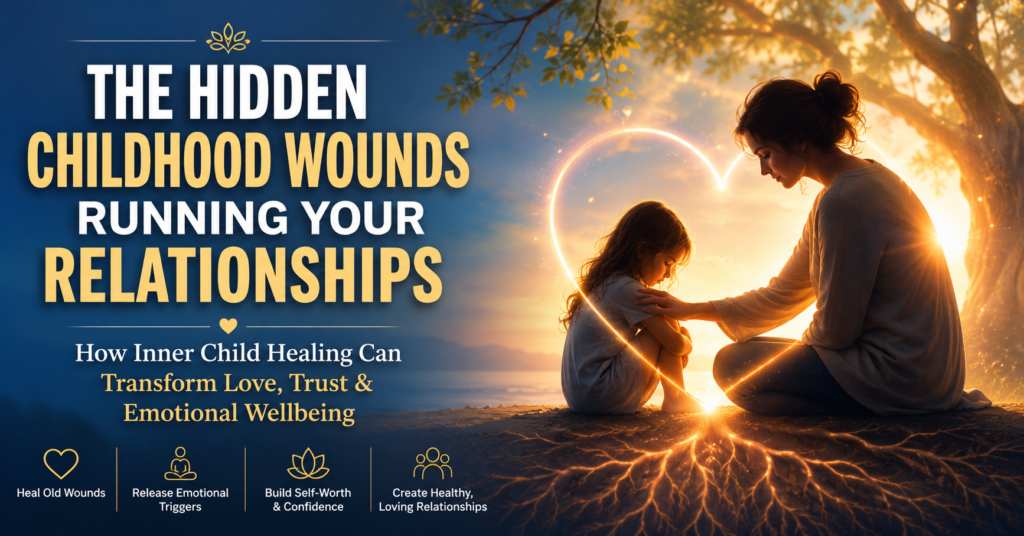
The Hidden Childhood Wounds That May Be Running Your Relationships
Inner Child Healing Changes Adult Relationships:- Have you ever found yourself asking:
- Why do I get so hurt when someone doesn’t text back?
- Why do I keep attracting emotionally unavailable partners?
- Why do I struggle to say “no” even when I’m exhausted?
- Why do I fear being abandoned, rejected, or left behind?
- Why do small conflicts feel so emotionally overwhelming?
If these questions resonate with you, the answer may not lie in your current relationship.
It may lie much earlier.
It may lie within your inner child.
At Skanda Wellbeing, we often work with individuals who believe their relationship struggles are caused by bad luck, poor partner choices, or personal flaws.
Yet beneath the surface, we frequently discover something deeper:
An unhealed inner child longing to feel safe, seen, loved, and accepted.
The relationships we build as adults often reflect the emotional experiences we had as children.
When those experiences were painful, inconsistent, or emotionally neglectful, those wounds don’t simply disappear.
They follow us into adulthood.
And they often show up in our closest relationships.
What Is the Inner Child?
Your inner child is the emotional part of you that carries your earliest experiences, memories, beliefs, and feelings.
Think of it as the younger version of yourself that still lives within your subconscious mind.
This inner child remembers:
- How loved you felt
- How safe you felt
- How accepted you felt
- How emotionally supported you felt
- Whether your needs were met
Even if your conscious mind has moved on, your nervous system and subconscious memory continue carrying those emotional experiences.
Imagine a computer running software installed years ago.
You may have changed the screen, keyboard, and operating system.
But deep inside, old programming still influences how the system operates.
The same is true for emotional patterns.
You will be also like to read – Emotional Exhaustion and Nervous System Healing
Why Childhood Experiences Affect Adult Relationships
Children learn about love before they learn about language.
The way we were comforted, criticized, ignored, praised, or supported becomes our blueprint for relationships.
If love felt conditional, we may become people pleasers.
If affection felt unpredictable, we may develop abandonment fears.
If emotions were dismissed, we may struggle to express our feelings.
If conflict felt unsafe, we may avoid difficult conversations.
The child adapts to survive.
The adult continues repeating the adaptation.
The Most Common Relationship Wounds Rooted in Childhood
1. The Abandonment Wound
One of the most common emotional wounds we see.
This wound develops when a child experiences:
- Emotional neglect
- Inconsistent caregiving
- Separation from caregivers
- Divorce
- Emotional unavailability
- Feeling unseen or forgotten
As adults, abandonment wounds may sound like:
“What if they leave me?”
“What if I’m not enough?”
“What if I lose them?”
Even healthy relationships can feel threatening because the nervous system remains on alert.
Signs of Abandonment Wounds
- Clinginess
- Fear of being alone
- Overthinking relationships
- Anxiety when someone pulls away
- Difficulty trusting others
- Constant need for reassurance
Example
Imagine someone doesn’t reply to your message for several hours.
A regulated response might be:
“They’re probably busy.”
An abandonment wound may interpret it as:
“They’re losing interest.”
“They don’t care.”
“I’m going to be rejected.”
The emotional reaction isn’t about the text message.
It’s about an old wound being activated.
2. People Pleasing: The Survival Strategy Disguised as Kindness
Many people believe people pleasing is simply being nice.
In reality, it is often a trauma response.
Children who learned that love was earned through performance often become adults who sacrifice themselves to keep others happy.
They learn:
“If I make everyone happy, I will be accepted.”
“If I say no, I might be rejected.”
“If I have needs, I might become a burden.”
Over time, they lose connection with their authentic selves.
Signs of People Pleasing
- Difficulty setting boundaries
- Fear of disappointing others
- Constant guilt
- Overcommitting
- Seeking approval
- Ignoring personal needs
The tragedy?
Many people pleasers become exhausted while receiving very little emotional nourishment themselves.
3. Fear of Rejection
At its core, rejection touches one of humanity’s deepest fears:
The fear of not belonging.
For a child, belonging equals safety.
When children experience criticism, emotional invalidation, bullying, or conditional love, they may develop an intense sensitivity to rejection.
As adults, this may appear as:
- Fear of speaking up
- Fear of vulnerability
- Avoiding dating
- Staying in unhealthy relationships
- Avoiding opportunities
- Perfectionism
Many people aren’t afraid of failure.
They’re afraid of what failure might mean about them.
Why Adult Relationships Trigger Childhood Wounds
Relationships act like mirrors.
They reveal unresolved emotional patterns we may not even know exist.
This is why seemingly small events can create disproportionately large reactions.
A partner forgetting a date.
A delayed message.
Constructive feedback.
A disagreement.
These situations may activate old memories stored within the emotional brain.
The adult experiences the present.
The inner child remembers the past.
Both reactions occur simultaneously.
Emotional Triggers Are Invitations, Not Punishments
Most people try to avoid triggers.
Healing invites us to understand them.
Think of emotional triggers like warning lights on a car dashboard.
The light is not the problem.
The light is alerting you to something that needs attention.
Similarly, emotional triggers reveal:
- Unmet needs
- Unresolved wounds
- Limiting beliefs
- Emotional pain seeking healing
Instead of asking:
“Why am I reacting like this?”
Try asking:
“What is this reaction trying to teach me?”
That single shift can transform your healing journey.
The Most Asked Questions About Inner Child Healing
Can Inner Child Healing Improve Relationships?
Yes.
When we heal childhood wounds, we often experience:
- Better communication
- Healthier boundaries
- Greater emotional resilience
- Increased self-worth
- More secure attachments
- Less fear of abandonment
Can Childhood Trauma Affect Romantic Relationships?
Absolutely.
Unresolved childhood experiences often influence:
- Partner selection
- Trust
- Emotional regulation
- Conflict resolution
- Intimacy
Why Do I Keep Attracting the Same Type of Relationship?
Because unresolved patterns seek resolution.
Until awareness develops, we unconsciously recreate familiar emotional dynamics.
Not because they are healthy.
Because they are familiar.
The nervous system often prefers familiar discomfort over unfamiliar safety.
Is It Ever Too Late to Heal?
No.
The brain remains adaptable throughout life.
This concept, known as neuroplasticity, means new emotional experiences can create new neural pathways.
Healing can happen at any age.
How Inner Child Healing Creates Lasting Change
Healing is not about blaming parents.
It is not about reliving pain endlessly.
It is about understanding your story so you can stop unconsciously repeating it.
At Skanda Wellbeing, healing may involve:
Guided Inner Child Work
Connecting with younger parts of yourself that still carry emotional pain.
Hypnotherapy
Accessing subconscious beliefs formed during childhood and gently reframing them.
Sound Healing
Supporting nervous system regulation and emotional release.
Emotional Awareness Practices
Learning to recognize triggers without becoming controlled by them.
Mindfulness and Self-Compassion
Developing a kinder relationship with yourself.
A Powerful Shift
Imagine two versions of yourself.
The first constantly seeks validation from others.
The second knows their worth regardless of external approval.
The first fears abandonment.
The second trusts their ability to handle life’s uncertainties.
The first sacrifices themselves to be loved.
The second understands that authentic love does not require self-abandonment.
This transformation is possible.
Not because life changes overnight.
But because your relationship with yourself changes.
Healing Begins With Awareness
Your emotional triggers are not evidence that you are broken.
Your fears are not signs of weakness.
Your relationship struggles do not mean you are unlovable.
They may simply be invitations from younger parts of yourself asking to be seen, heard, and healed.
The child within you is not asking for perfection.
The child within you is asking for connection.
And when that connection is restored, every relationship in your life begins to change.
Join Our Guided Inner Child Healing Circle
If you find yourself repeating the same relationship patterns, struggling with abandonment fears, people pleasing, emotional overwhelm, or fear of rejection, know that healing is possible.
At Skanda Wellbeing, we provide a safe and supportive space to explore, understand, and heal the emotional roots of these patterns.
- Guided Inner Child Healing Sessions
- Emotional Wellness Support
- Hypnotherapy & Subconscious Healing
- Sound Healing & Nervous System Regulation
- Compassionate Community Healing Circles
Join Our Guided Inner Child Healing Circle
Take the first step toward healthier relationships by healing the relationship you have with yourself.
📞 WhatsApp: +971 527899504
The healing journey begins when you stop asking:
“What’s wrong with me?”
And start asking:
“What part of me still needs love?”